Insights/Markets · September 14, 2026
A new language is a new set of revenue journeys
Localization as market coverage, not linguistic QA. If checkout still says Place order in English, that market is not actually live.
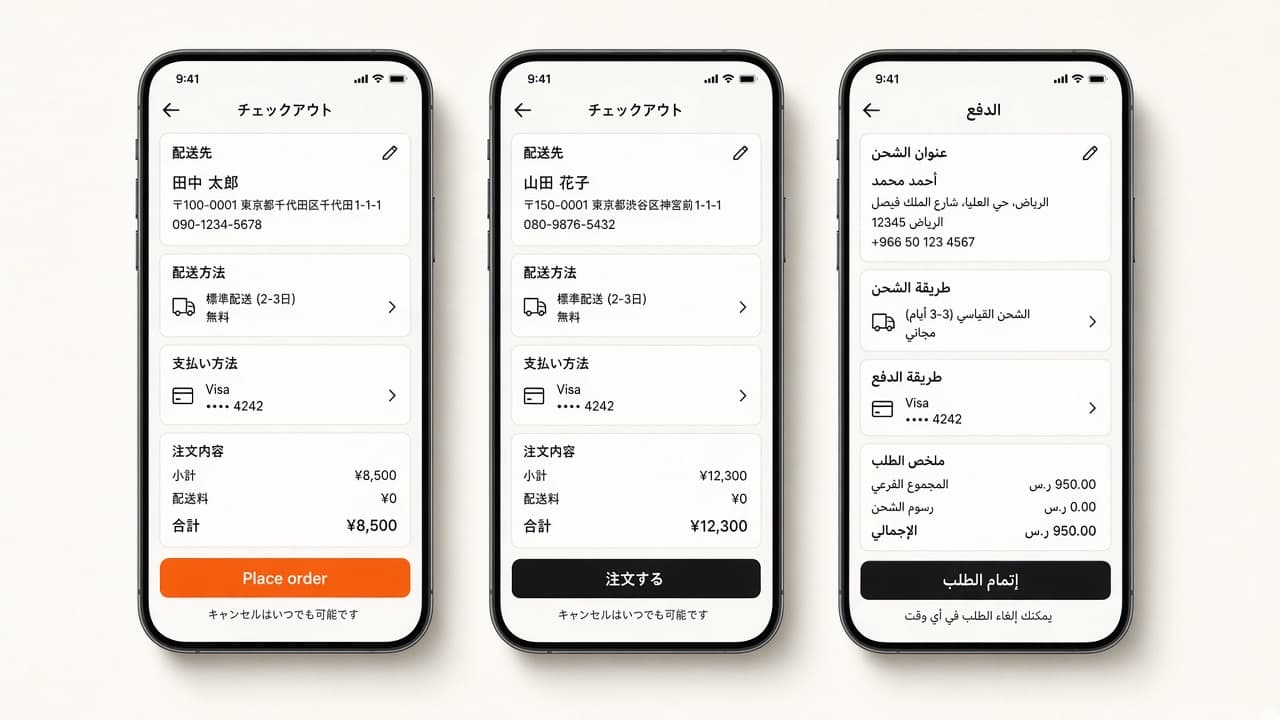
The market shipped. The journey did not.
Expansion decks treat a language pack as a launch. Customers treat the path. If they cannot complete signup, pay, or confirm in the locale you claim to sell, you are not in that market. You are in a catalog of strings that never made it to the last step.
In 2020, IKEA’s Bahrain creative went out with English on one line and, immediately below it, the Arabic that literally read “Same text but in Arabic.” The reconstruction of the workflow is the point: a file moved through a vendor, a tool, and a designer who did not speak the language. Nobody walked the customer-facing surface as a journey before it went live. IKEA turned it into a joke the same day. Most checkout screens do not get a marketing save.
Coverage economics, not string count
Web × iOS × Android × desktop × languages is not a test-count problem. Headcount does not scale with locales. A second QA organization per market is how the hidden cost of uncertainty shows up on a GTM plan: in-region linguists, launch-week audits, and a silent English fallback that support only hears about after revenue misses.
The same walk that asks whether checkout completed can ask whether the confirmation is still in English, whether a German primary button clipped, whether Arabic mirrored, whether the date and currency match the market. Those are findings on the journey. They are not four products. One walk, many signals is the operating model. Entering more markets without a second validation org is the GTM version of the same idea.
How C-suites should see a locale finding
Not “linguistic QA.” A revenue path, a market, evidence, and a next action.
Checkpoints on the path
- Name the journeys that make money in every market you claim to sell.
- Walk the same intent in each supported locale - set language, then complete the path.
- Treat untranslated English, RTL breakage, truncation, and locale formats as journey findings, not as a separate crawler.
- Return exact strings, screens, and draft copy your localization owners can apply.
- Include localization in the release-readiness view: Ready, At risk, or Not ready for that market.
What this is not
KaDeep AI is not a translation management system. Draft copy in a finding is a handoff. Applying strings into the product is still your CMS, your linguist, your TMS. Accessibility belongs on the same walk as a signal - not as a launch-week PDF - but a locale failure is first a market you are not actually in.
Related insights